 Deutsch
 Français
Hail resistance of photovoltaic modules
Since the hailstorms of 2022, which caused more than €5 billion in insured damage in France, the hail resistance of photovoltaic modules has become a key issue. This risk, long considered marginal, now ranks high on the list of claims.
In 2024, according to data from a major US insurer reported by PVEL, hail accounted for only 6% of photovoltaic claims in terms of volume... but 72% of the amounts paid out in the United States. This disproportion reveals the seriousness of the phenomenon: recent hailstorms exceed the minimum regulatory certification thresholds (2.5 cm), sometimes causing performance losses of more than 30%, even without visible damage.
In this context, insurers are tightening their requirements: new performance criteria, specific deductibles, and in some cases, exclusion of certain risk areas. Hail is thus becoming a technical and financial risk factor that must be anticipated in any exposed photovoltaic project.
A general reduction in mechanical robustness
PVEL's KIWA 2025 scorecard reveals a worrying trend in the latest round of photovoltaic module reliability testing :
- 83% of manufacturers failed at least one test, compared to 66% in 2024.
- The failures mainly concerned mechanical strength (load application) and hail resistance (hailstone projection) tests, two particularly critical tests for durability in extreme conditions.
Why the decline ?
Cost pressures are pushing manufacturers to modify the BOM (Bill of Materials) of modules, which degrades their mechanical strength and resistance to hail.
What the standards say about hail resistance
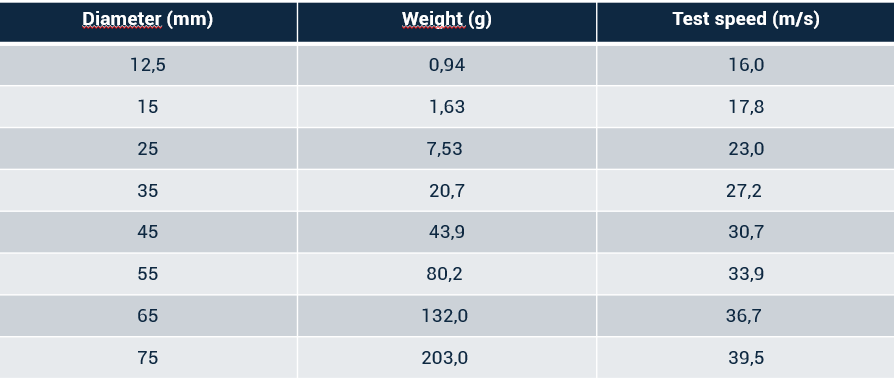
The reference standard for the certification of photovoltaic modules, IEC 61215-2 (section MQT 17), requires a hail resistance test. This test involves projecting 11 hailstones with a diameter of 25 mm (±1 mm) at 23 m/s (approximately 83 km/h) from a distance of 0.5 to 1 meter onto critical areas of the module: frame, corner, and cell center.
To be compliant, the module must not show any visible cracks or excessive power loss, and must maintain a minimum insulation resistance of 3500 ohms/cm. The mass and diameter of the hailstones are subject to a strict tolerance of ±5% to ensure the validity of the test.
Here is a summary table of the characteristics of the hailstones used according to this standard :
This test is required by the international reference standard IEC, but it only simulates a moderate impact, which no longer always reflects the reality in the field.
To address these challenges, the IEC TS 63397:2022 standard complements IEC 61215. This standard strengthens the requirements by incorporating additional test sequences: thermal cycles, humid heat, electroluminescence imaging, and covers a wider range of hailstone diameters (25, 35, 45 mm, etc.). It aims to ensure the robustness of modules in more demanding environments.
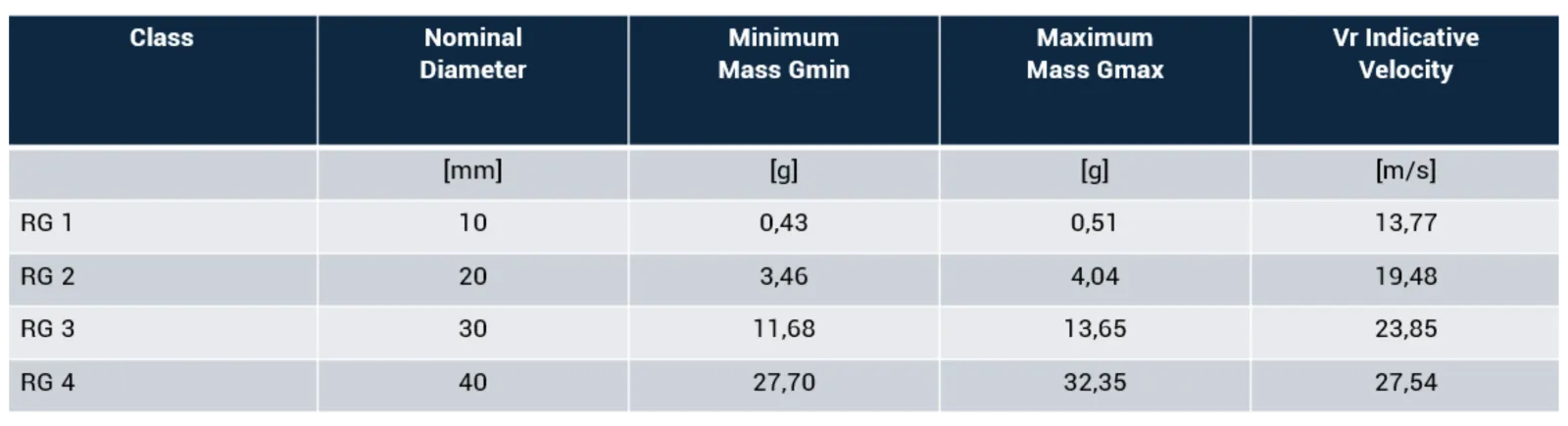
In addition, the RG standard, developed by Swiss and Austrian organizations, proposes even stricter criteria. Its main difference from IEC 61215-2 lies in the temperature of the hailstones used: -20°C compared to -4°C ± 2°C in the IEC standard.
This lower temperature significantly increases the hardness of the projectiles, increasing the severity of the impacts.
It should be noted that under the RG protocol, an impact is also performed in the middle of the glass, at the level of the bypass diode, i.e., to further stress the most fragile areas of the module, particularly its center.
Important note : Hail resistance is not just about the size of the hailstones. Temperature, speed, and impact location are all parameters that influence the severity of the test.
Here is a summary table of the tests conducted according to the standard. It shows the diameter, mass, and velocity of the hailstones used in the tests.
In what way is the minimum standard of the IEC standard insufficient ?
Hailstones measuring 30 to 50 mm in diameter are now frequently observed during extreme weather events, particularly in France, Italy, and Germany. Their speed often exceeds 30 m/s, well beyond the conditions simulated by the IEC 61215 standard.
As a result, some IEC 61215-certified modules break, crack, or become inoperable during severe hailstorms.
This inadequacy of the standards is also reflected in the photovoltaic insurance sector. Since 2024, insurers have been tightening their conditions: additional premiums of up to 20%, stricter deductibles, and even refusal of coverage for projects located in areas with high exposure to climate risk. A common clause explicitly mentions the size of hailstones, excluding coverage for damage if hailstones larger than 30 mm are found on the site.
This development reflects the need for more robust modules that are better adapted to real-world conditions in order to guarantee both the durability of the installations and their insurance coverage.
The importance of laboratory testing
While standards establish minimum compliance thresholds, laboratory tests, such as those conducted under IEC TS 63397:2022 or according to Swiss protocols, go further by reproducing extreme conditions similar to those found in the field.
These in-depth assessments make it possible to measure the actual robustness of modules in the face of hail, climatic variations, and wear and tear.
At SYNAPSUN, we offer a complete range of certified photovoltaic modules that exceed the minimum requirements of the IEC standard, with modules resistant to 35 mm hailstones (IEC) and RG4 with to ensure the safety of your photovoltaic installations.
In addition, we also have modules specifically designed to offer the best guarantees of hail resistance, thanks to thicker glass, thus reinforcing the robustness of the panels.
Our range of hail-resistant modules
For your rooftop power plants
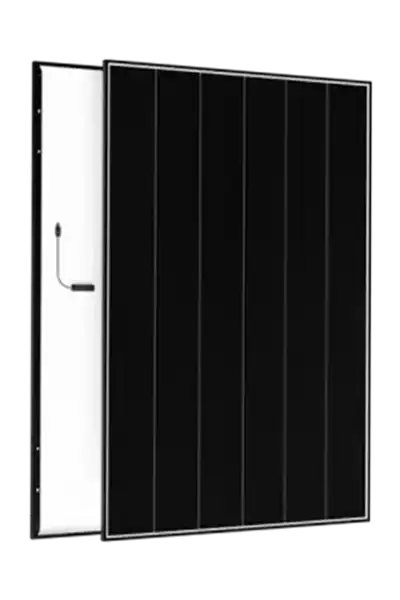
AIKO-Axxx-MCE54Mw
1762x1134x30mm
470 – 500 Wc
Hail resistance : RG4
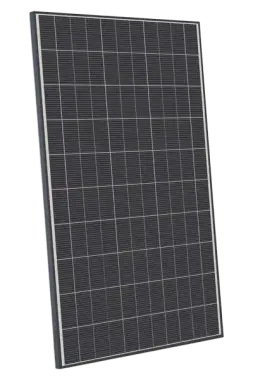
TARKA 110 VSMP DIAMANT
1868×1070×35 mm
445 – 450 Wc
Hail resistance : RG5
For your ground-mounted power plants
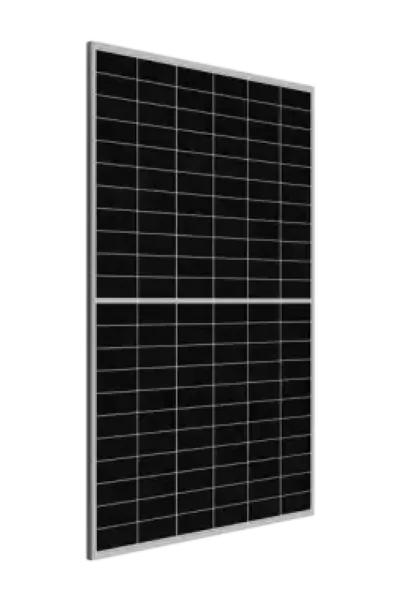
CS6.2-66TB-HP
2382×1134×35 mm
615 – 625 Wc
Hail resistance : RG4
Do you have further questions or need more information ?
The hail resistance filter is now available on SYNAPSUN.COM
Sources :
- Solarbuilder (07/2025), Solar Stress Test: Reliability gaps widen in latest PV module testing, available on https://solarbuildermag.com/news/solar-stress-test-reliability-gaps-emerge-in-latest-pv-module-testing/
- Abecourtage (06/2025), Assurance et photovoltaïque : le guide pour les professionnels, available on https://www.abecourtage.com/blog/assurance-et-photovoltaique-en-2025-le-guide-complet
- PVEL (09/2024), Inside the Hail Stress Sequence for PVEL's PV Module, available on https://www.pvel.com/wp-content/uploads/PVEL_White-Paper_Hail-Stress-Sequence-for-PV-Modules.pdf
- Desk SYNAPSUN (01/2025) Les modules sont-ils résistants à la grêle ? available on https://desk.synapsun.com/portal/fr/kb/articles/les-modules-sont-ils-r%C3%A9sistants-%C3%A0-la-gr%C3%AAle