 Deutsch
 Français
Understanding Mechanical Loads on Photovoltaic Modules
The mechanical load values indicated on photovoltaic module data sheets (such as 5400Pa / 2400Pa) correspond to the panel's ability to withstand external loads, mainly due to wind and snow.
These loads are linked to tests as early as IEC 61215: 2021, which imposes these minimum resistances on photovoltaic modules.
In our example :
5400 Pa: Pressure load (front of panel) representing the maximum load due to snow accumulation, which corresponds to a 1 to 1.5m layer of snow on the module.
2400 Pa: Depression load (back of panel) simulating the force exerted by strong winds, which can lift the module. This corresponds to a wind speed of around 130 to 150 km/h, depending on the mounting configuration.
Note: Some manufacturers offer modules rated for higher mechanical loads (e.g., 6000 Pa / 4000 Pa).
Impact on a photovoltaic installation
These values are critical to ensuring the durability and safety of panels based on the installation environment:
- In mountainous regions, high resistance to pressure (snow) is essential.
- In cyclone-prone areas, high resistance to suction (wind) is critical.
Each project requires a mechanical load calculation to verify that the structure is properly designed to support the modules.
The load values vary depending on the project’s location as well as the surrounding environment.
How are these values measured ?
The mechanical strength of photovoltaic modules is tested according to the IEC 61730:2021 standard. Manufacturers subject their panels to various tests to validate their durability.
In this context, photovoltaic modules undergo static load tests under pressure and suction to simulate extreme conditions:
- A pressure of 5400 Pa is applied to the front face to simulate the weight of snow.
A suction pressure of 2400 Pa is then applied to the rear face to simulate wind effects.
These stresses are repeated over 3 complete cycles, with each phase lasting 1 hour.
After each cycle, a visual inspection ensures there are no defects (cracks, deformations, etc.). Finally, an electrical test verifies that the module's power output has not decreased by more than 5%.
The IEC 61215-2:2021 standard also introduces dynamic load testing, in addition to the static tests.
This involves pressure/pressure cycles ranging from ±1000 Pa (standard) to ±5400 Pa.
And this for 1000 cycles (the minimum prescribed in the 2021 standard), each lasting 4 seconds.
The same verification protocol (visual, electrical) is then applied as for the static test.
The two tests are complementary :
- The static test checks whether a module survives an extreme one-off load.
- The dynamic test checks whether it can withstand a repeated, realistic and cumulative load.
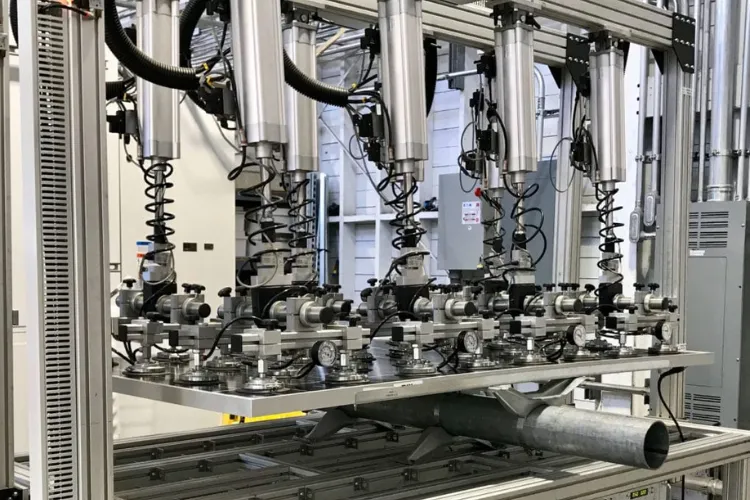
Difference between Test Load and Design Load
Test Load : This is the load applied to the module during laboratory testing, generally higher than the actual load expected under normal installation conditions. It ensures that the module can withstand extreme conditions without immediate failure.
Design Load : This is the maximum load the module is designed to withstand safely over the long term under real-life conditions. It is often lower than the test load to incorporate a safety factor.
In short, test load is laboratory verification, while design load represents real-life conditions of use with a safety margin.
Note: in general, the manufacturer's warranty covers load designs.
What factors influence these values ?
Several factors can affect the mechanical strength of a photovoltaic module :
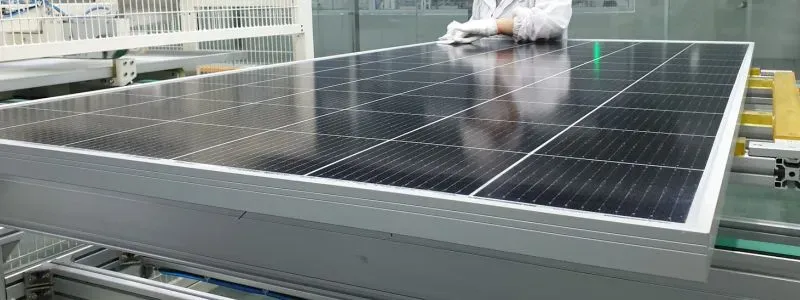
Module design and materials :
- Glass: Its thickness and type (tempered or standard glass) influence strength
- Frame: The frame material influences rigidity and resistance to deformation. It is most often aluminum, but can also be steel.
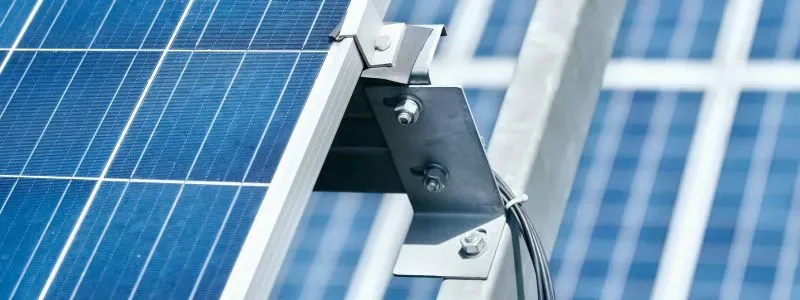
Mounting system type and configuration :
- Number and position of fasteners: The greater the number of anchor points (clamps or screws), the more evenly loads are distributed and the greater the mechanical load capacity.
- The arrangement of the support rails should be perpendicular or parallel to the long side.
Module inclination: a shallow inclination increases snow accumulation, whereas a steeper inclination is more exposed to wind.
Refer to the manufacturer's installation manual for the actual loads borne by the module depending on the installation method !
How can I be sure that the modules are compatible with my project ?
Installation method and manual :
Configuration, clamp positioning, number and width of clamps must comply with the manufacturer's installation manual.
SLS (System Limit State) :
In project development, the mechanical loads listed in the installation manual are the resistance thresholds that must not be exceeded to ensure that the system remains within its ELS.
In summary
The mechanical load values of photovoltaic modules are crucial for ensuring the durability of installations in all climatic conditions. Taking into account influencing factors such as materials, fastenings, the environment, certifications and ageing makes it possible to select modules that are adapted to the specific needs of each project. Most importantly, consult the manufacturer's assembly manual to determine the actual loads borne by the module depending on the chosen mounting method.
Sources :
- New energy , PV module mechanical load testing, available on https://nerc.turkuamk.fi/pv-module-mechanical-load-testing/
- Cener (04/2023), CENER launches a new mechanical load test bench for photovoltaic modules and structural elements, available on https://www.cener.com/en/2023/04/04/cener-launches-a-new-mechanical-load-test-bench-for-photovoltaic-modules-and-structural-elements/
- PV magazine (05/2021) Module testing reveals increase in mechanical failures, available on https://www.pv-magazine.com/2021/05/31/module-testing-reveals-increase-in-mechanical-failures/