 Deutsch
 Français
Why will Glass-Glass modules dominate the market?
Glass-glass modules are increasingly sought after by developers
Already widely showcased at trade fairs over the past five years, bi-glass or glass-glass modules are now strengthening their position in the photovoltaic market. Widely used in China, particularly for large-scale ground-mounted power plants of several tens of MW, they are gradually proving their value, supported by growing operational feedback. Recently, a large rooftop project in the Netherlands (400 kWp) was announced in the press. It is equipped not only with bi-glass modules, but also with bifacial cells, enabling the collection of light energy from the rear side. What are the reasons driving developers to consider this technology for their projects? What advantages do these types of panels offer?
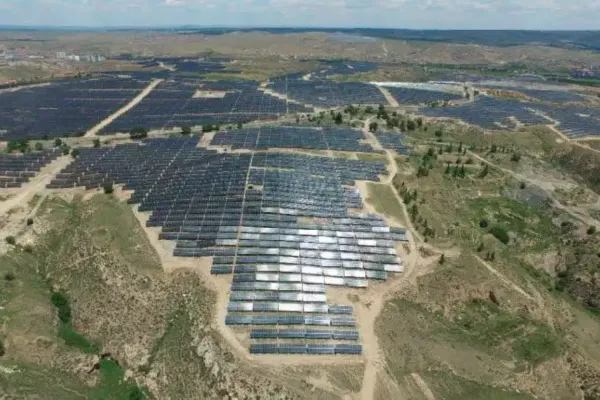
Glass-Glass modules: a truly durable solution
Robustness is the first word that comes to mind when talking about glass-glass modules. The glass sandwich structure provides greater mechanical strength compared to modules with a traditional polymer backsheet. Its symmetrical architecture places the assembled cells on the module’s neutral axis, protecting them from microcracks and the resulting power losses.
Glass-glass modules also benefit from enhanced stability. This results from improved chemical insulation that prevents harmful climatic effects from degrading performance. Moisture cannot penetrate the module, eliminating the risk of snail trails commonly observed in standard modules. As a result, these panels can be installed in extreme environments such as desert conditions, areas with high salinity, or high ammonia concentrations. Climate chamber tests conducted by manufacturers confirm this performance.*
The use of glass on the rear side also allows for a higher maximum system voltage of up to 1500 V. This enables a greater number of modules per string, leading to a reduction in balance-of-system (BoS) costs and associated labor. In addition, glass-glass modules offer improved fire resistance ratings, which are often required for installations on public-access buildings.
The question of framed vs. frameless modules
Many manufacturers are now opting for a frameless design, which allows them to achieve additional savings on raw materials while also definitively eliminating PID issues caused by frames. Development work is currently underway in collaboration with mounting system and tracker suppliers.
From an operational perspective, the absence of a frame facilitates water runoff and prevents stagnation, which is often associated with soiling observed along the lower edges of modules. This results in reduced O&M costs. Additional savings are also achieved in logistics, as the thinner laminates allow a higher number of modules to be transported per shipment (around 15% more modules).
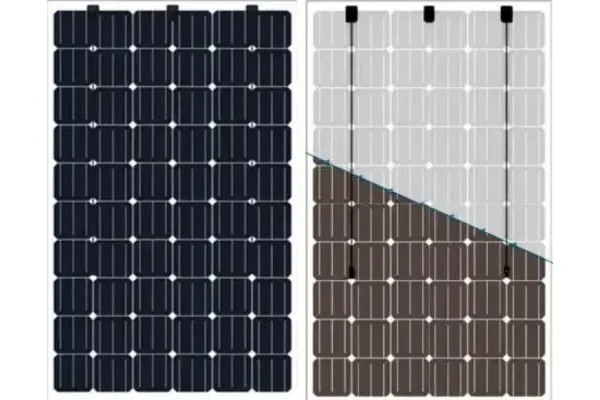
A module designed for bifaciality
Beyond all the advantages listed above, the added value of bi-glass modules is fully realized when the module is both transparent and equipped with bifacial cells. Indeed, the collection of reflected light on the rear side enables additional energy generation that can reach 20 to 25% under certain albedo conditions. As an added benefit, for installations exposed to snowfall, bifaciality promotes snow melting by keeping the module operational (and therefore warm), even when the front side is covered.
We are convinced that this type of module will significantly contribute to reducing the cost of PV electricity generation and will address many challenges related to building integration as well as coupling with other activities such as agrivoltaics.