 Deutsch
 Français
What should you know about agrivoltaics legislation in France ?
French legislation decree no. 2024-318 of 8 April 2024, concerning the development of agrivoltaics and the conditions for installing photovoltaic systems on agricultural, natural, or forest land, provides a regulatory framework for the deployment of solar power plants integrated with agricultural production. This decree complements Decree no. 2023-1408 of 29 December 2023, the APER Law of 11 March 2023, the Order of 5 July 2024, and the instruction DGPE/SDPE/2025-93 dated 18 February 2025.
Context
In response to the challenges posed by climate change and the need to diversify renewable energy sources, agrivoltaics has emerged as an innovative solution to combine agriculture with solar energy production. However, its rapid growth has raised concerns about preserving farmland and ensuring the compatibility between agricultural and photovoltaic activities. The decree establishes a structured regulatory framework for the sector.
Scope
An agrivoltaic installation is defined as an electricity production system using solar radiation, with modules installed on agricultural land. It must contribute sustainably to the establishment, continuation, or development of agricultural production.
The decree also clarifies the terminology around “agrivoltaics”: only installations located on cultivated or pastoral land, on greenhouses, or on livestock buildings fall within its scope. Conversely, solar power plants set up on other agricultural buildings, fallow or unused land are excluded.
Key objectives
Agrivoltaics is positioned as a tool for the agricultural sector to tackle food security and sovereignty challenges as well as the consequences of climate change. An agrivoltaic system must directly deliver at least one of the following benefits to the plot of agricultural land :
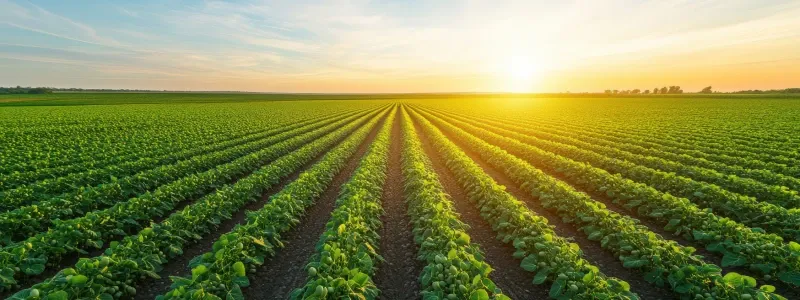
Enhance agronomic potential and outcomes :
- Improve soil quality, crop yields
- Bring fallow or abandoned land back into cultivation
- ...
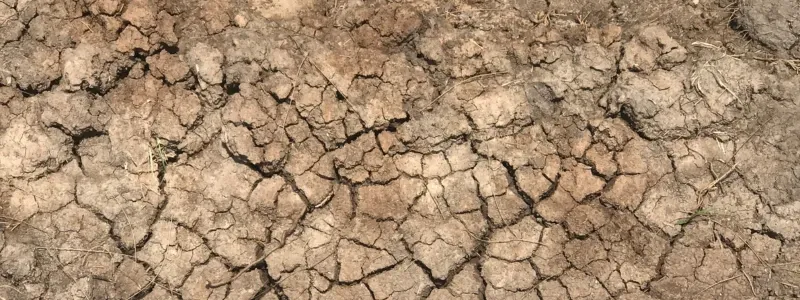
Improve resilience to climate change :
- Counter declining trends in yield and quality of production.
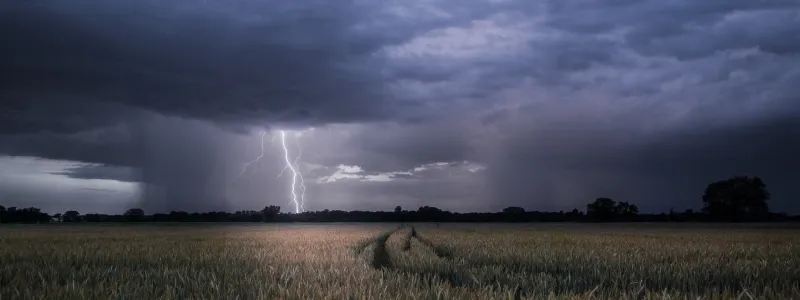
Protect against at least one climatic hazard :
- Frost
- Hail
- Heavy rain
- Strong winds, or drought.

Improve animal welfare :
- Provide better living conditions
- Thermal comfort
- ...
Specific provisions
m
Agriculture must remain the primary activity on the agricultural plot of land.
- For systems >10 MWp, ground coverage is limited to 40%. The area made unusable for farming by the installation must not exceed 10% of the plot.
- Height and spacing of PV systems must be compatible with the movement of livestock and farming machinery.
Agricultural output must remain “significant”.
- Any yield loss is limited to 10% compared to a reference plot or local benchmark.
A sustainable income from farming must be ensured.
- The average agricultural income should remain stable or increase following the installation.
Reversibility of the installation and protection of farming and grazing rights must be guaranteed.
- The system’s lifespan is capped at 40 years, extendable by 10 years under certain conditions.
- Dismantling and full restoration of the land is mandatory at the end of this period.
- Financial guarantees must be secured prior to installation to ensure the site can be returned to its original or agriculturally viable state.
Regulatory process, monitoring & sanctions
An agrivoltaic project is subject to a rigorous regulatory process. From the study phase onwards, an environmental consultancy assesses impacts on biodiversity, soil, and landscapes, while an agricultural expert evaluates the benefits to the farm.
The CDPENAF (Commission for the Protection of Natural, Agricultural and Forest Areas) is consulted to assess compatibility with farmland preservation. Although its opinion is advisory, it significantly influences the final decision. Other bodies, such as the Chambers of Agriculture and the DREAL (Regional Directorate for Environment, Planning and Housing), are involved to ensure agronomic and environmental compliance.
Final authorisation from the Prefecture marks the completion of the approval process, based on all stakeholder contributions.
Once operational, agrivoltaic power plants are subject to regular monitoring to ensure compliance with agricultural production and service commitments. The plant operator must submit periodic reports demonstrating that the agrivoltaic criteria are being upheld. An initial inspection is carried out within three years of commissioning, followed by checks every five years. In the event of non-compliance, the administrative authority may issue a formal notice requiring rectification. Persistent violations may lead to penalties, including removal of agrivoltaic status, which would result in the loss of regulatory and financial benefits.
A new paradigm for the solar industry
This decree-driven development of agrivoltaics demands a profound shift in the solar industry’s practices and professions. Traditionally focused on technical and energy-related aspects, the sector must now integrate agricultural expertise as a central element. It’s no longer just about optimising energy output, but about supporting and enhancing agricultural practices.
Implementing an agrivoltaic project is not simply about installing PV modules in a field—it means embedding an energy system within a working farm ecosystem, considering crop requirements, production cycles, and sustainability goals. This requires close collaboration with farmers, agronomists, technical innovations, and hybrid skills at the intersection of agriculture and energy.
By placing agronomy at the heart of projects, agrivoltaics is redefining the role of solar professionals : they become technical partners in the service of resilient, sustainable agriculture. For those working in photovoltaics, this evolution offers a unique opportunity to expand their scope, innovate, and play an active role in the ecological transition—by designing energy systems in synergy with farming.
Sources :
- Légifrance (04/2024), Decree no. 2024-318 on agrivoltaics, available at https://www.legifrance.gouv.fr/jorf/id/JORFTEXT000049386027
- Légifrance (03/2024), Decree No. 2024 on the technical criteria for agrivoltaic installations, available on https://www.legifrance.gouv.fr/jorf/id/JORFTEXT000048736409
- Légifrance (02/2023), Decree No. 2023-132 on the eligibility conditions for agrivoltaic projects, available on https://www.legifrance.gouv.fr/jorf/id/JORFTEXT000047294244
- Légifrance (06/2024), Decree No. 2024-710 on the siting of agrivoltaic installations, available on https://www.legifrance.gouv.fr/jorf/id/JORFTEXT000049891545